Cosmetic and Personal Care Product Testing

Cosmetic and Personal Care Product Testing

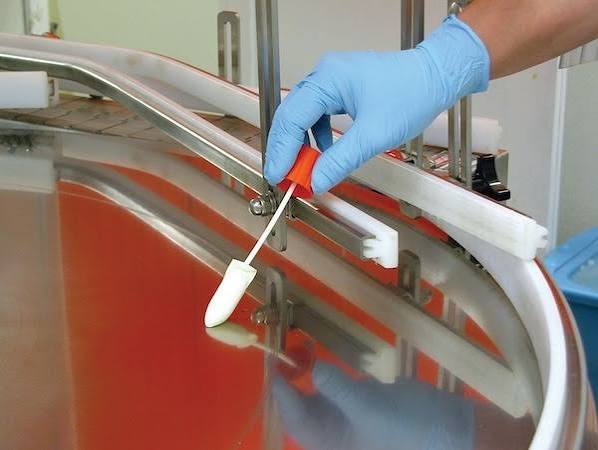
Cosmetics, perfumes and essential oils are products of chemical or natural origin dedicated specifically to skin and mucosa. The constant development of the cosmetic industry has generated the necessity to carry out microbiological analysis on the raw materials used in the production of cosmetics as well as the final products, with the purpose of obtaining products of good microbiological quality. The microbiological tests performed as follows

Cosmetic & Personal Care Product Testing

We provide reliable and accurate testing services that comply with international standards to a diverse range of industries

Major Test Requirement

IS 14648 Microbiological Examination of Cosmetics and Cosmetic Raw Materials for Total Bacterial Count (TBC), Microbiological Examination of Cosmetics and Cosmetic Raw Materials for specific pathogens such as Staphylococcus aureus, Candida albicans, Pseudomonas aeruginosa and Escherichia coli.

ASTM Test organisms:

Enterobacter aerogenes ATCC 13048
Pseudomonas aeruginosa ATCC 15442 or ATCC 9027
Staphylococcus aureus ATCC 6538
Candida albicans ATCC 10231
Aspergillus braziliensis ATCC 16404

Sampling days:
0,1,2,7,14,21 and 28 days.

Passing criteria:
Bacteria ˃3 log reduction / 99.9% in 28 days.
Fungi ˃2 log reduction / 90% in 28 days.

United State Pharmacopeia (USP35); 51

Test organisms:
Staphylococcus aureus ATCC 6538
Escherichia coli ATCC 8739
Pseudomonas aeruginosa ATCC 15442 or ATCC 9027
Candida albicans ATCC 10231
Aspergillus braziliensis ATCC 16404

Sampling days: 0,1,2,7,14,21 and 28 days.

Passing criteria:
Bacteria ˃3 log reduction / 99.9% in 7days.
Fungi ˃2 log reduction / 90% in 14 days.

ISO 11930
Test organisms:
Staphylococcus aureus ATCC 6538
Escherichia coli ATCC 8739
Pseudomonas aeruginosa ATCC 15442 or ATCC 9027
Candida albicans ATCC 10231
Aspergillus braziliensis ATCC 16404

Sampling days:
0,1,2,7,14,21 and 28 days.

Passing criteria:
Criteria A: Protection against microbial proliferation that may present potential risk.
Criteria B: Protection is acceptable if microbial risk is tolerable.

our success ingredients

Customer Obsession, Clear Vision and Adaptability

Bacteria/Virus

0 +

Tests Completed

0 +

Research Work

0 +

Delighted Customer

0 +

Customer Testimonials

Surface & Hygiene Product Testing FAQ

Most frequent questions and answers

What is the difference between JISL 1902 and ISO 20743?

Both the methods are comparable with difference in expression of results.

Masterbatch samples of pen measuring 5cm x 5cm are ideal to test antibacterial activity by JISZ 2801 / ISO 22196. In the absence of requisite sample ASTM E 2149 method can be used.

Antibacterial means preventing the growth of bacteria or to kill bacteria. Antimicrobial is a broad term and includes bacteria, fungus and viruses. Very often antimicrobial is used to indicate antibacterial property.

Antimicrobial treated fabrics should be washed using ASTM E 3162 protocol using AATCC detergent without optical brightener, followed by rinse and air dry. This method ensures that covalently linked antimicrobial agent retains its functionality after 30-50 washes.

AATCC 147 is a parallel streak method to demonstrate bacteriostatic activity of fabrics by diffusion phenomenon. AATCC 147 is a qualitative method whereas AATCC 100 is a quantitative method for evaluation of degree of antimicrobial activity.

Bacteria are differentiated as Gram-positive bacteria or Gram-negative bacteria based on gram staining due to differences in complexity of cell wall. E.g., Staphylococcus aureus is Gram positive bacteria and Escherichia coli / Klebsiella pneumoniae are Gram negative bacteria.

Yes, we carry out virus testing of porous surfaces such as Fabrics, Yarns, etc. Also, non-porous surfaces such as plastics, paints, metals, polymers, leather, etc.

Viruses that have an outer wrapping are enveloped viruses. It protects the virus. It is made of phospholipids, proteins and glycoproteins. Viruses lacking the envelope are called non-enveloped virus.

Many viruses have an icosahedral or diamond shaped morphology. Some viruses are helical or oblong and some have unique morphology like Bricks, Bullet shaped, etc.

Susceptibility of Fabrics to mildew and rot is evaluated by AATCC 30 test method.

For tarpaulin or water proofed textile materials intended for outdoor and above ground use, its antifungal property or effectiveness of treatment is assessed by AATCC 30 Part IV humidity jar method.